

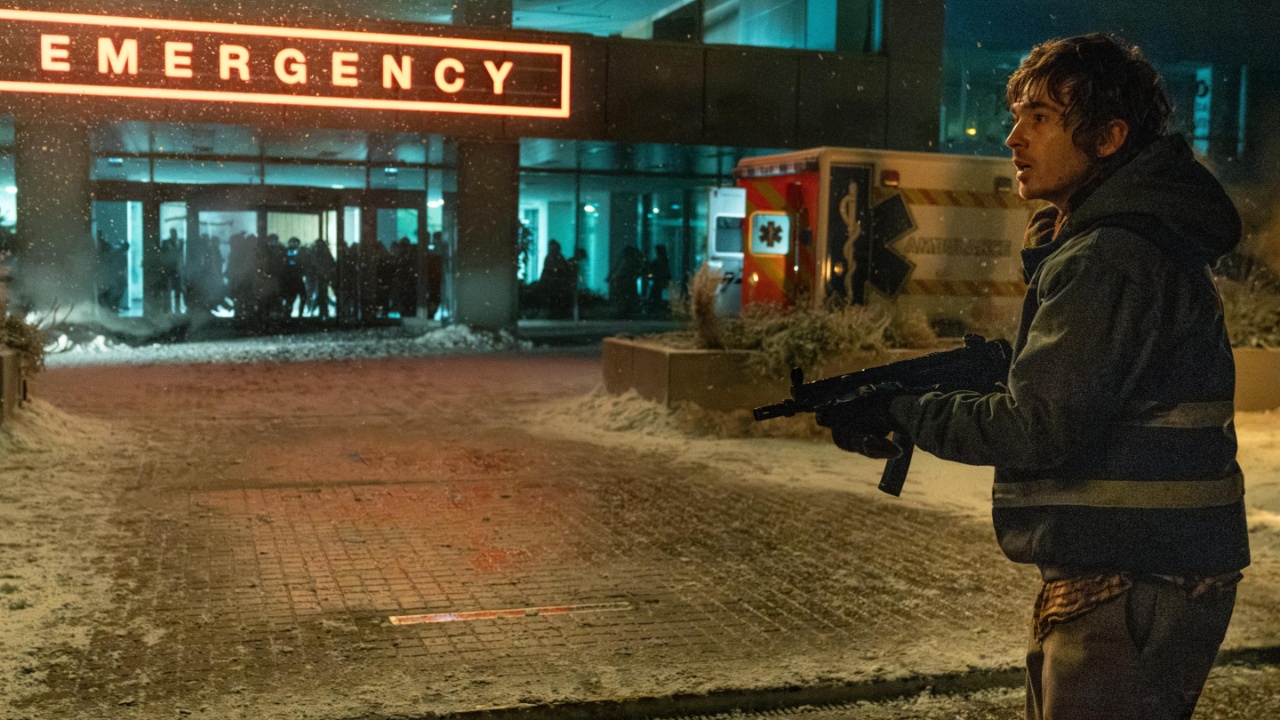
After six live-action films, a 2021 reboot, and a canceled Netflix series, the Resident Evil reboot has returned to theaters under director Zach Cregger. The latest adaptation centers on Bryan (Austin Abrams), a medical courier who is tasked with delivering a high-priority package to Raccoon City General Hospital.
While the film has received good reviews, some audience members have had mixed reactions to its ending. One viewer described the ending as “brutal,” pointing out that Bryan spends the entire movie protecting the package because he believes he is delivering something important to the hospital, only to discover that it contains the final piece needed to create the cure. By the time he delivers it, however, his infection has progressed beyond the point at which he can be saved.
According to Cregger, Resident Evil’s ending was almost completely different. The theatrical ending was actually Cregger’s “Plan B,” created using backup footage he had deliberately shot. Instead of directly adapting one of the games, the movie introduces a new protagonist, Bryan, while retaining familiar Resident Evil locations, monsters, and gameplay mechanics.
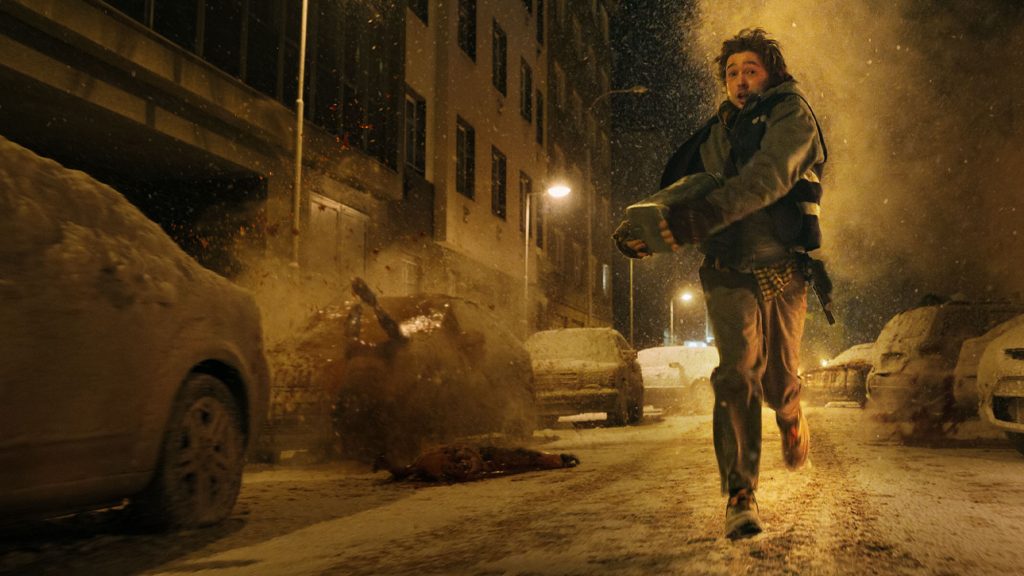
The story follows Bryan as the T-Virus takes control of his body, forcing him to desperately search for a cure. As the virus alters Bryan’s senses and body, he becomes increasingly violent, killing scientists who stand in his way. The syringe containing the cure becomes Bryan’s last hope of survival, keeping audiences invested in whether he can be saved.
In the released version, the syringe eventually falls from the upper levels of Raccoon City General Hospital, seemingly ending Bryan’s chance of being cured. However, this was not the original ending Cregger had written.
In the original script, the scientist removed the needle and dropped it, causing it to shatter much earlier. The remaining sequence would then have focused largely on Bryan killing the scientists, without the cure remaining as a source of hope. Test audiences reportedly felt that the original version made it seem as though the story had already ended because Bryan’s chance of survival was gone.
Cregger had already filmed a backup shot of the scientist putting the needle in his pocket, despite not knowing whether he would need it. That contingency footage ultimately allowed Cregger to rebuild the final sequence and create the ending audiences saw in theaters. The revelation shows how test screenings and unused footage helped shape Resident Evil’s final ending.
Speaking to Collider, Cregger explained, “Originally in the script, that scientist pulls the needle out, and as soon as Austin grabs the woman’s face, he drops it. It shatters, and then the rest of the movie is just Austin killing the scientists.” He added, “Thank God I shot for this as a contingency plan. It was like my Plan B.”
“But I shot that shot of the scientist putting the needle in his pocket just because I had a feeling. I was like, I feel like I’m going to need that,” he continued. “And so then we were able to build a new sequence of the end. And I shot a contingency of him going for the stab in Prague when we were doing our thing as just like, if I need it, I should just get it. And thank God, because that’s what we ended up using. It keeps the stakes all the way until the end. It’s like, ‘Save him! Save him!’ Whereas before it’s just like, ‘Kill them, I guess? Kill them all?’”
Fans hoping to see the original ending may be disappointed, as Cregger has confirmed that the existing film is already his “Cregger cut.”
SYNOPSIS: Bryan (Austin Abrams), a laid-back organ courier, is sent on a late-night delivery to Raccoon City General Hospital. En route through a snowy mountain road, he accidentally hits a strange woman with his car. She survives — but something is very wrong. As he tries to help, Bryan stumbles into a full-blown outbreak involving horrifying tentacle-based mutations and bio-engineered monstrosities.
The cast includes Abrams as Bryan, a medical courier, alongside Paul Walter Hauser, Zach Cherry, Kali Reis, and Johnno Wilson.
Directed by Cregger, who co-wrote the screenplay with Shay Hatten, the film serves as the second reboot of the Resident Evil film series. It is the eighth installment overall in the franchise, which is based on the video game series by Capcom.
The film is produced by Columbia Pictures and PlayStation Productions, in association with Constantin Film and Vertigo Entertainment.
Resident Evil is now playing in theaters.


 Preferred Source
 Google Discover
 Google News